

When you get behind the wheel, you might not realize you've already agreed to something significant: implied consent. This legal concept means that by driving, you've consented to submit to chemical tests if an officer suspects you're under the influence. Understanding this can make a huge difference in how you navigate DUI stops. Refusing a test isn't just a simple "no" — it carries consequences that might surprise you. So, what exactly happens if you refuse, and how does this vary by state? Let's explore the complexities of implied consent together.
Definition of Implied Consent

Implied consent laws, which you agree to by simply driving on public roads, mean that you've pre-approved blood alcohol testing if suspected of DUI. This framework ensures that law enforcement can administer breath, blood, or urine tests to determine your Blood Alcohol Concentration (BAC). The rationale is straightforward: public safety. By driving, you implicitly accept the responsibility of ensuring you're not impaired, safeguarding both yourself and others on the road.
Understanding implied consent is crucial. It doesn't mean you can't refuse a test, but refusal comes with immediate penalties. For instance, your driver's license may be suspended, often for a longer period than if you were convicted of DUI. The state enforces these penalties to deter impaired driving and encourage compliance with testing.
You should also know that implied consent applies at the moment an officer has reasonable suspicion of impairment. This means any erratic driving behavior or failure to pass field sobriety tests can trigger the requirement.
In essence, implied consent laws create a preemptive agreement between you and the state, balancing individual rights with public welfare. Being aware of this can help you make informed decisions if you're ever in such a situation.
Legal Basis for Implied Consent
The legal foundation for implied consent rests on the principle that driving is a privilege, not a right, and states have the authority to regulate it for public safety. When you get a driver's license, you implicitly agree to abide by certain rules, including submitting to chemical tests if suspected of driving under the influence (DUI). This agreement isn't just a bureaucratic formality; it's a fundamental part of the social contract aimed at protecting everyone on the road.
States have enacted implied consent laws to deter drunk driving and streamline the process of gathering evidence. By accepting the privilege to drive, you're also accepting the conditions that come with it, which include chemical testing. These laws are designed with the public's safety in mind, ensuring that law enforcement can effectively manage and reduce DUI incidents.
Critically, these laws balance individual rights with community welfare. Regulating who can drive and under what conditions is essential in preventing accidents and fatalities. By driving, you tacitly agree to these terms, reinforcing the idea that the privilege of driving comes with significant responsibilities.
Consequences of Refusing Tests

Refusing a chemical test when suspected of DUI can lead to severe legal and administrative penalties that can significantly impact your driving privileges and overall life. When you decline a breath, blood, or urine test, you're essentially violating the implied consent law. This triggers automatic consequences, starting with an immediate suspension of your driver's license. The duration of this suspension varies by state but can last from several months to over a year.
Moreover, refusal often results in heightened penalties if you're eventually convicted of DUI. Courts typically view refusal as an admission of guilt, which can lead to harsher fines, longer jail time, and extended probation periods. Insurance companies may also see you as a higher risk, leading to increased premiums or even cancellation of your policy.
In some states, refusal can lead to mandatory installation of an ignition interlock device, further adding to your financial and personal burdens. Additionally, multiple refusals can lead to more severe repercussions, including permanent license revocation.
The legal landscape is designed to dissuade refusal, making the choice to refuse a test a potentially costly mistake. Understanding these consequences helps you make informed decisions when faced with a DUI stop.
Defenses Against Implied Consent Violations
Many effective defenses can be employed to challenge implied consent violations in DUI cases, potentially mitigating the severe consequences you might face.
One common defense is questioning the legality of the initial traffic stop. If the officer didn't have a valid reason to pull you over, any evidence obtained subsequently, including test refusals, could be inadmissible.
Another defense involves scrutinizing the administration and timing of the implied consent advisory. Officers must inform you of the consequences of refusing a chemical test. If this wasn't clearly communicated, or if you weren't given adequate time to consider your decision, it might weaken the prosecution's case.
Challenging the accuracy and reliability of the testing equipment is also a viable defense. Breathalyzers and other devices need regular maintenance and calibration. Any lapses in this routine can cast doubt on the results' validity.
Lastly, consider medical conditions or substances that might've interfered with the test results. Certain medical conditions can produce false positives or impair your ability to provide a sample, which could serve as a strong defense.
State Variations in Implied Consent Laws
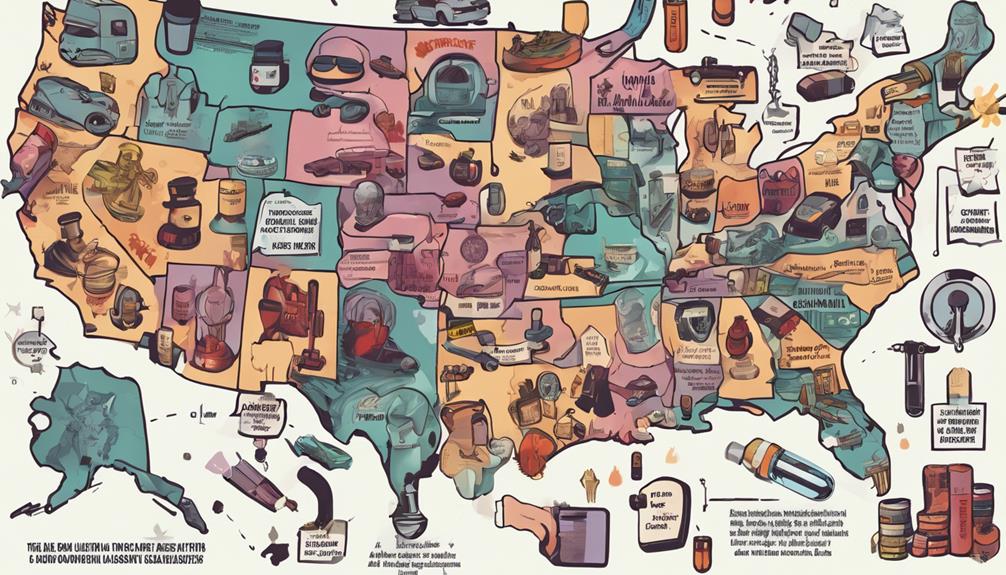
Understanding the intricacies of implied consent laws requires recognizing that each state has its own specific regulations and procedures, which can significantly impact the outcome of your DUI case.
For example, some states impose immediate administrative penalties, like a license suspension, if you refuse a chemical test, while others may allow a brief grace period before taking action. It's crucial to know these variations because they can affect your legal strategy and your ability to contest the charges.
In states like California, refusal to submit to a breathalyzer or blood test can lead to harsher penalties, including longer license suspensions and increased fines. Conversely, states like Ohio might offer limited driving privileges during a suspension period, provided you comply with certain conditions. Knowing these differences can help you make more informed decisions if you're ever pulled over.
Moreover, some states, such as Texas, have 'no refusal' weekends where law enforcement can obtain expedited warrants to conduct blood tests. This highlights the importance of understanding local laws and consulting with a DUI attorney familiar with your state's specific regulations.
Your awareness and preparation can be key determinants in navigating the legal landscape of DUI charges.
Conclusion
Understanding implied consent in DUI cases is vital for you as a driver. It means you've agreed to chemical testing by simply driving.
Refusing these tests can result in harsher penalties than a DUI conviction itself. Each state has unique laws, so being informed about your state's specifics is crucial.
Knowing your rights and the potential consequences can help you make informed decisions and protect yourself legally.
Don't underestimate the importance of this knowledge—it's your safeguard on the road.