
When you think about why a breathalyzer test is effective, start by considering its reliance on precise chemical reactions and advanced sensor technologies. These devices measure blood alcohol concentration (BAC) using methods like fuel cell sensors and infrared spectroscopy, providing immediate and accurate results. Their reliability is further enhanced through regular calibration and strict officer training, ensuring minimal errors during operation. But what really makes these tools indispensable in law enforcement and medical settings? Let's explore how the combination of technology and stringent standards contributes to their unparalleled effectiveness.
Chemical Reaction Basis

The effectiveness of a breathalyzer test hinges on the chemical reaction between ethanol in the breath and a reagent such as potassium dichromate. When you exhale into a breathalyzer, the ethanol in your breath comes into contact with the potassium dichromate solution. This reaction causes the potassium dichromate, which is initially orange, to change color due to the reduction process, forming chromium sulfate, which is green.
In this reaction, ethanol is oxidized to acetic acid, while the potassium dichromate is reduced to chromium sulfate. The extent of this color change is directly proportional to the concentration of ethanol in your breath. By measuring this color change, the breathalyzer calculates your blood alcohol concentration (BAC).
Modern breathalyzers employ infrared spectroscopy or fuel cell sensors to enhance accuracy. Infrared spectroscopy detects ethanol by measuring the absorption of specific wavelengths of light, while fuel cell sensors generate an electric current proportional to the amount of ethanol oxidized at the electrode surface. Both methods offer precise and reliable BAC readings.
Understanding this chemical basis ensures you grasp how breathalyzers provide accurate measurements, crucial for law enforcement and personal monitoring. It's a clear example of applied chemistry in everyday technology.
Alcohol Detection Sensitivity
Due to technological advancements, modern breathalyzers can detect even trace amounts of alcohol with remarkable sensitivity. These devices utilize sophisticated sensors such as fuel cells and infrared spectroscopy to measure blood alcohol concentration (BAC) accurately.
Fuel cell sensors work by oxidizing the alcohol in your breath, producing an electrical current proportional to the alcohol content. This method ensures high specificity and minimal cross-reactivity with other substances, making it highly reliable.
Infrared spectroscopy, on the other hand, measures the absorption of infrared light by alcohol molecules in your breath. This technique is highly sensitive, allowing for the detection of very low BAC levels. The combination of these technologies ensures that breathalyzers can provide precise readings, even at low concentrations, which is crucial for law enforcement and medical applications.
Moreover, advancements in microprocessor technology have enhanced the calibration and accuracy of these devices. Modern breathalyzers are equipped with algorithms that adjust for variables such as temperature and humidity, ensuring that external factors don't affect the results.
You'll find that these improvements make breathalyzers not only more accurate but also more consistent over repeated uses, thereby enhancing their overall effectiveness in alcohol detection.
Real-Time Results

When using a breathalyzer, you'll benefit from its ability to provide immediate alcohol detection.
This on-the-spot analysis ensures rapid assessment of blood alcohol concentration (BAC), enhancing decision-making accuracy.
Real-time results are crucial for law enforcement and personal use, reducing delays and increasing reliability.
Immediate Alcohol Detection
In real-time scenarios, breathalyzer tests provide immediate results by detecting the presence of alcohol in exhaled breath through advanced electrochemical sensors.
These sensors, often based on fuel cell technology, react with the alcohol molecules in your breath, producing an electric current proportional to the alcohol concentration. The device then converts this current into a measurable blood alcohol concentration (BAC) level.
Immediate alcohol detection is crucial for law enforcement and medical applications where timely information is vital. By using a breathalyzer, you can quickly determine if someone's BAC exceeds legal limits. The real-time feedback allows for prompt decisions, ensuring both public safety and individual health.
Electrochemical sensors in breathalyzers are highly sensitive and specific to ethanol. This specificity reduces the likelihood of false positives from other substances, enhancing the test's reliability. These sensors also offer rapid recovery times, enabling multiple tests in quick succession without compromising accuracy.
Breathalyzers are calibrated to maintain precision over time, ensuring consistent performance. Regular calibration and maintenance are essential, as they ensure the device's reliability and accuracy.
This immediate detection capability makes breathalyzers indispensable tools for monitoring and controlling alcohol consumption in various settings.
On-the-Spot Analysis
How do breathalyzers provide on-the-spot analysis to deliver real-time results that are both accurate and legally admissible?
Breathalyzers use advanced electrochemical fuel cell sensors or infrared spectroscopy to instantly measure blood alcohol concentration (BAC) from a breath sample. When you blow into the device, ethanol in your breath reacts with the sensor, generating an electrical current proportional to the alcohol concentration. This immediate feedback ensures that law enforcement can make quick decisions based on scientifically validated data.
The device's real-time processing capabilities are crucial for roadside testing. It ensures that a driver's BAC level is evaluated on-site, minimizing any delays that could affect the accuracy of the results. Moreover, the data is digitally recorded and timestamped, adding a layer of reliability and traceability.
The integration of microprocessors allows for precise calibration, ensuring that the results are within a narrow margin of error, typically below 0.01% BAC. These features make the breathalyzer a powerful tool for legal proceedings.
The accuracy and immediacy of the results, combined with the device's ability to store and print data, ensure that the evidence is both robust and legally defensible.
Legal Reliability
Legal reliability of breathalyzer tests hinges on the accuracy and calibration of the devices, as well as adherence to standardized testing procedures.
When law enforcement administers a breathalyzer test, they must follow strict protocols to ensure results are admissible in court. These protocols include proper device maintenance, regular calibration, and the operator's certification.
Breathalyzers measure Blood Alcohol Concentration (BAC) using infrared spectroscopy or electrochemical fuel cell technology. These methods provide evidence-based metrics that are widely accepted in legal contexts. However, for a breathalyzer result to hold up in court, the device must be regularly calibrated and maintained.
Legal challenges often focus on whether the operator followed the correct procedures. For instance, officers must observe the suspect for a specific period before testing to ensure no foreign substances affect the outcome. Additionally, the device's calibration records must be up-to-date.
Courts also require documentation proving the officer's training and certification to use the breathalyzer. This ensures that the operator understands the technical aspects and legal implications of the test.
Calibration and Accuracy
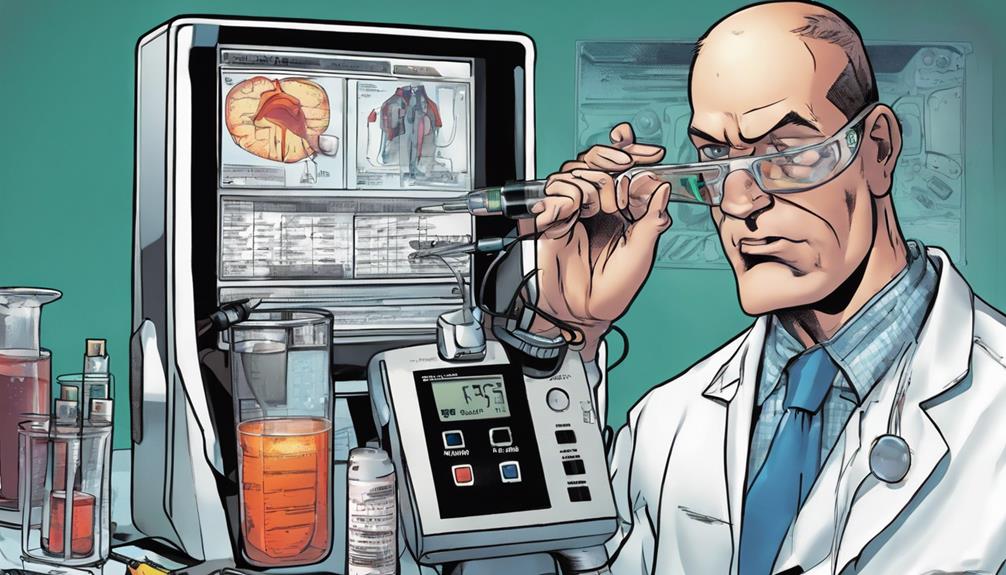
Calibration and accuracy of breathalyzer devices are crucial for ensuring reliable Blood Alcohol Concentration (BAC) readings. When you use a breathalyzer, it must be properly calibrated to provide precise measurements. Calibration involves adjusting the device to a known standard, often using a calibration gas with a specific alcohol concentration. This process ensures the breathalyzer's sensors are accurately detecting and measuring alcohol levels.
Regular calibration is essential because sensor drift can occur over time, leading to inaccurate readings. Manufacturers typically recommend calibration intervals, which can vary depending on the device and usage frequency. You should follow these guidelines to maintain the device's accuracy.
Accuracy also depends on the device's technology. Fuel cell sensors and infrared spectroscopy are commonly used in modern breathalyzers. Fuel cell sensors oxidize alcohol on an electrode, generating an electrical current proportional to the alcohol concentration. Infrared spectroscopy measures the absorption of infrared light by alcohol molecules in the breath. Both methods are highly accurate when the device is well-calibrated.
Inaccurate BAC readings can have serious legal and safety implications. Therefore, stringent calibration protocols and regular maintenance are imperative. By ensuring your breathalyzer is accurately calibrated, you can trust its BAC readings, enhancing its effectiveness as a reliable tool for alcohol detection.
Officer Training
Consistently, thorough officer training is essential for ensuring the proper use and interpretation of breathalyzer test results. Without rigorous training, officers may misinterpret readings or mishandle devices, leading to inaccurate results that could affect legal proceedings.
Training programs typically cover the operational mechanics of the breathalyzer, including calibration procedures, maintenance protocols, and the scientific principles behind blood alcohol concentration (BAC) measurement.
You'll find that officers are also educated on legal guidelines and evidentiary standards for administering breathalyzer tests. This includes understanding when it's appropriate to request a test and how to document the process to maintain the integrity of the evidence. Proper documentation and adherence to protocol are crucial for the admissibility of breathalyzer results in court.
Moreover, officer training emphasizes the importance of recognizing potential sources of error, such as environmental factors or physiological conditions that could affect BAC readings. By being well-versed in these aspects, officers can make more informed decisions and provide more reliable testimony.
This comprehensive training ensures that breathalyzer tests aren't only administered correctly but also interpreted accurately, thereby enhancing their effectiveness and reliability in law enforcement.
Conclusion
You've learned that a breathalyzer test's effectiveness hinges on precise chemical reactions and advanced sensor technologies.
Its sensitivity to alcohol, coupled with real-time results, ensures its utility in legal settings.
Regular calibration and stringent officer training maintain high accuracy and reliability.
By adhering to these strict standards, breathalyzers provide a dependable measure of blood alcohol concentration, making them essential tools for law enforcement and medical use.