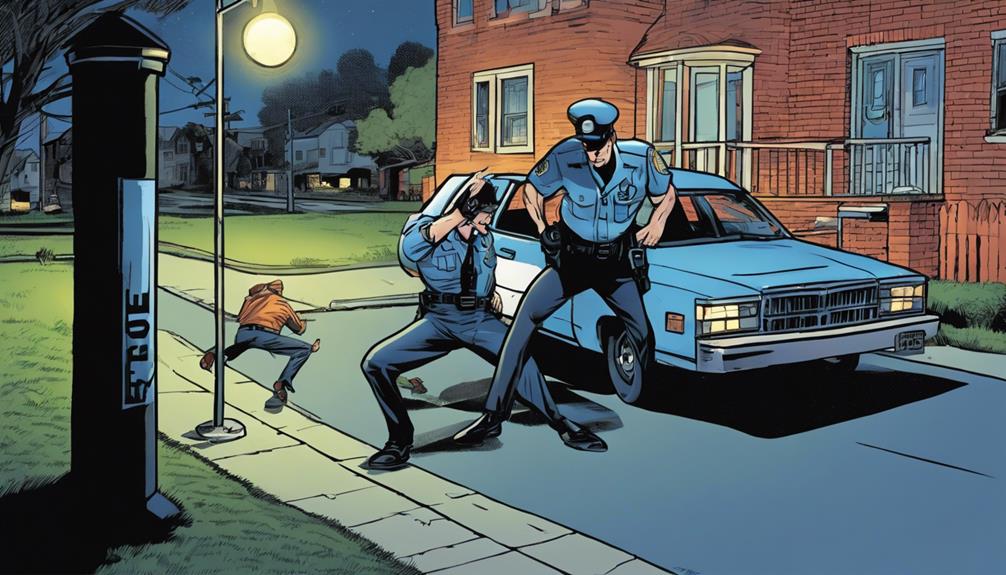
When you refuse a field sobriety test, you might think you're avoiding trouble, but the legal consequences can be quite severe. Under implied consent laws, your license could be suspended immediately, often lasting from six months to a year. This refusal could also lead to significant fines, potential jail time, and a permanent criminal record, which can affect future job prospects. Even more concerning, courts might see your refusal as an admission of guilt, complicating any defense and potentially increasing DUI penalties. So, what exactly happens next, and how can you navigate these daunting legal waters?
Immediate License Suspension
Upon refusal of a field sobriety test, your driver's license may be subject to immediate suspension under implied consent laws. These laws mandate that by operating a motor vehicle, you've implicitly agreed to submit to chemical tests if an officer suspects you of driving under the influence. Refusal to comply can result in administrative penalties, separate from any criminal charges.
The suspension period varies by jurisdiction but typically ranges from six months to a year for a first-time refusal. Repeat refusals often incur longer suspension periods. This administrative action is usually automatic, meaning you won't have the opportunity to argue your case before your license is initially suspended. However, you may request a hearing to contest the suspension.
At this hearing, the burden of proof lies with the motorist to demonstrate that the officer lacked reasonable grounds for the DUI suspicion or that the refusal was justified under specific circumstances.
Failing to reinstate your driving privileges could severely impact your daily life, affecting employment, education, and personal responsibilities. Therefore, understanding the consequences of refusing a field sobriety test and the immediate license suspension it triggers is crucial.
Criminal Penalties
Refusing a field sobriety test can also lead to criminal penalties, including fines, imprisonment, and a permanent mark on your criminal record. By declining the test, you may face charges that escalate the severity of your legal situation. Many jurisdictions equate refusal to compliance, treating it as an admission of guilt, which could result in harsher sentencing during court proceedings.
Fines for refusal can be substantial, varying by state, but often reaching several thousand dollars. This financial burden is compounded by court costs and potential increases in insurance premiums.
Imprisonment is another serious consequence. Depending on prior offenses and specific state laws, you could face anywhere from a few days to several months of incarceration. Repeat offenders are especially at risk for extended sentences.
A refusal will also likely be recorded on your criminal record. This permanent mark can affect future employment opportunities, housing applications, and more. Background checks by potential employers or landlords will reveal these criminal penalties, potentially hindering your prospects.
Understanding these severe repercussions is crucial. Consulting with a legal expert can provide guidance tailored to your circumstances, ensuring you navigate these complex legal waters effectively.
Impact on DUI Charges
Refusing a field sobriety test may result in increased legal consequences, including enhanced penalties.
Additionally, your refusal can be used as evidence in court to imply intoxication.
Understanding these ramifications is crucial when assessing your legal strategy.
Increased Legal Consequences
When a driver declines to perform a field sobriety test, the refusal can significantly enhance the legal ramifications associated with DUI charges.
Refusing to comply with a field sobriety test often leads to immediate administrative penalties, such as the suspension or revocation of your driver's license. Moreover, the refusal can be interpreted as an indication of guilt, thereby aggravating the charges you face.
In many jurisdictions, laws stipulate that refusal to undergo field sobriety testing results in mandatory penalties. These can include heightened fines, extended periods of license suspension, and mandatory participation in alcohol education or treatment programs. Additionally, refusal may lead to increased insurance premiums due to the perceived higher risk associated with non-compliance.
Furthermore, this refusal can result in enhanced scrutiny by law enforcement and the judicial system. Prosecutors may argue that your refusal indicates an awareness of impairment, thus justifying harsher sentencing if convicted. These increased legal consequences can complicate your defense strategy, making it more challenging to negotiate plea bargains or obtain favorable outcomes.
In essence, declining a field sobriety test doesn't just affect the immediate situation but can profoundly impact the severity of your DUI charges and the subsequent penalties.
Evidence in Court
The refusal to undergo a field sobriety test can significantly impact the admissibility of evidence in court, often complicating your defense against DUI charges. When you decline to participate in such tests, prosecutors may argue that your refusal implies consciousness of guilt. This inference can be compelling to a jury, potentially undermining your defense strategy.
Moreover, the absence of field sobriety test results can limit your attorney's ability to challenge the arresting officer's observations and conclusions. Typically, these tests provide concrete data that can either support or refute claims regarding your level of impairment. Without this evidence, your defense might rely heavily on subjective accounts, which can be less persuasive.
Additionally, many jurisdictions have implied consent laws, meaning that by driving, you've already agreed to submit to certain tests. Refusal can lead to the prosecution highlighting this legal stipulation, further weakening your case.
However, it's important to note that refusal alone doesn't equate to a conviction. Your legal counsel can still scrutinize other aspects of the arrest, such as the legality of the traffic stop or the accuracy of alternative evidence like breathalyzer or blood test results. Navigating these complexities requires a nuanced understanding of DUI law and strategic legal maneuvering.
Implied Consent Laws
Under implied consent laws, you're legally obligated to submit to chemical testing if lawfully arrested for driving under the influence.
Refusing to comply can result in automatic license suspension and additional legal penalties.
Understanding these consequences is crucial for making informed decisions during a DUI stop.
License Suspension Consequences
Refusing a field sobriety test often triggers automatic license suspension due to implied consent laws, which mandate that drivers implicitly agree to such tests as a condition of obtaining a driver's license. When you refuse, the state interprets this action as a violation of the implied consent agreement. Consequently, your driving privileges are immediately at risk.
Typically, the license suspension period varies by jurisdiction but can be substantial. For instance, many states enforce a suspension period ranging from six months to one year for a first refusal. Subsequent refusals may lead to even longer suspension periods. Importantly, this administrative penalty occurs independently of any criminal charges for driving under the influence (DUI).
You should be aware that contesting a license suspension for refusal is possible but challenging. You'll generally need to request an administrative hearing within a specified timeframe, often within ten to fifteen days. During this hearing, you must present a compelling argument against the suspension, demonstrating either procedural errors or invalid grounds for the original stop.
Legal Penalties Explained
Implied consent laws impose significant legal penalties on drivers who refuse to undergo field sobriety tests, including potential fines and mandatory educational programs. When you obtain a driver's license, you implicitly agree to submit to these tests if law enforcement suspects you of driving under the influence. Refusal to comply can lead to substantial repercussions.
Firstly, financial penalties are a common consequence. You might face fines that vary depending on jurisdiction and prior offenses. These fines can be hefty, serving as both punishment and deterrent.
Additionally, you could be mandated to attend educational programs focused on substance abuse and safe driving practices. These programs aim to rehabilitate and inform, yet they also represent a considerable time commitment and financial burden.
Moreover, refusal to take a field sobriety test can be used as evidence against you in court. Prosecutors may argue that your refusal indicates consciousness of guilt, thereby potentially influencing the outcome of your case.
The administrative and legal penalties associated with implied consent laws are designed to uphold public safety and ensure compliance with sobriety testing protocols. Understanding these repercussions is crucial for informed decision-making if you're ever faced with a field sobriety test request.
Court Admissibility
In legal proceedings, the admissibility of evidence from a field sobriety test hinges on various factors, including the circumstances of the test's administration and the defendant's rights. If you refuse a field sobriety test, the prosecution may argue that your refusal indicates consciousness of guilt. However, the court must consider whether the officer had probable cause to initiate the test and whether your refusal was justified.
The Fourth Amendment protects you from unreasonable searches and seizures. If an officer conducts a field sobriety test without probable cause, any evidence obtained may be deemed inadmissible. Additionally, courts examine if the test was administered according to standardized procedures. Deviations from these protocols can render the evidence unreliable and subject to exclusion.
Your right to legal counsel is also pivotal. If you requested an attorney and were denied, this denial might impact the admissibility of the evidence. Courts rigorously scrutinize whether your rights were upheld during the interaction.
Thus, the admissibility of a field sobriety test refusal isn't automatic; it requires careful judicial examination of probable cause, standardized procedures, and constitutional protections. Understanding these legal nuances is crucial for mounting an effective defense.
Insurance Rate Increases
A refusal to undergo a field sobriety test can lead to significant increases in your insurance premiums. Insurers view such refusals as high-risk behavior, often equating them to driving under the influence. Consequently, your refusal could result in being categorized as a high-risk driver, thereby prompting substantial hikes in your insurance rates.
Insurance companies access your driving record, which will note the refusal. This record can be factored into the risk assessment algorithms that determine premium costs. Even if you're not convicted of a DUI, the refusal alone can negatively impact your insurability. Many insurers impose surcharges or higher rates due to the perceived elevated risk.
Additionally, some states mandate that a refusal is treated similarly to a DUI conviction, further complicating your insurance situation. In such cases, you might be required to file an SR-22, a certificate of financial responsibility, to reinstate your driving privileges. This filing alone typically results in increased premiums.
The financial ramifications of refusing a field sobriety test extend beyond immediate legal penalties. The long-term impact on your insurance rates can be profound, potentially costing you thousands of dollars in increased premiums over several years.
Legal Defenses
When facing charges related to refusing a field sobriety test, you have several legal defenses that can be strategically employed to challenge the allegations.
First, you can argue that the officer lacked reasonable suspicion to initiate the traffic stop. Without reasonable suspicion, any evidence obtained, including your refusal, may be deemed inadmissible.
Another defense involves questioning the legality of the arrest. If the arresting officer didn't have probable cause to believe you were driving under the influence, the refusal shouldn't lead to penalties.
Additionally, you can challenge the accuracy and reliability of the field sobriety test instructions given by the officer. If the instructions were unclear or improperly administered, the validity of the test—and your refusal—can be contested.
You may also invoke medical or physical conditions that could impair your ability to perform the field tests accurately. Conditions such as vertigo, injuries, or disabilities can provide a valid defense.
Lastly, you can assert that you weren't adequately informed of the consequences of refusing the test, which is a requirement in many jurisdictions.
Proper legal counsel can help you navigate these defenses effectively.
Conclusion
In conclusion, refusing a field sobriety test triggers immediate license suspension under implied consent laws, potentially lasting up to a year.
You may face substantial fines, imprisonment, and a permanent criminal record, adversely affecting future employment opportunities.
This refusal can be construed as an admission of guilt, complicating your defense and increasing DUI-related penalties.
Moreover, your insurance rates will likely rise.
Understanding these severe consequences underscores the importance of informed decision-making during such legal encounters.