
When you find yourself facing first-time DUI probation, understanding the key conditions is crucial for navigating this challenging period. You'll encounter mandatory alcohol education, which aims to inform you about the risks associated with impaired driving. Regular check-ins with your probation officer ensure you're staying on track, while community service requirements help you give back to the community. The installation of an ignition interlock might be necessary, and abstaining from alcohol, along with random drug testing, keeps you accountable. Finally, timely payment of fines and fees is essential. So, what specific steps should you take to comply with these conditions?
Mandatory Alcohol Education

As part of your first-time DUI probation, you'll be required to complete a mandatory alcohol education program designed to educate you on the dangers and legal consequences of impaired driving. This program isn't just a formality; it's a crucial component of your probation that aims to prevent future offenses. You'll delve into the physiological and psychological effects of alcohol, understanding how it impairs your ability to operate a vehicle safely.
The curriculum often includes real-life testimonies from individuals affected by DUI incidents, making the repercussions of impaired driving all too real. You'll also review state-specific DUI laws, penalties, and the long-term impact a DUI conviction can have on your life, including employment and insurance rates.
Participation isn't optional, and failing to complete the program could result in additional penalties, including extended probation or even jail time. The goal is to instill a sense of responsibility and encourage behavioral changes that will make you think twice before getting behind the wheel after drinking.
Regular Probation Check-ins
You're required to attend scheduled meetings with your probation officer, which can vary in frequency based on your case.
During these check-ins, you'll need to provide detailed reports on your compliance with probation terms and any changes in your circumstances.
Communication can be face-to-face, via phone, or through electronic methods, ensuring constant oversight and accountability.
Scheduled Meeting Frequency
Regular probation check-ins for first-time DUI offenders often occur on a bi-weekly or monthly basis, ensuring compliance with court-ordered conditions.
These scheduled meetings are crucial for maintaining accountability and providing support throughout your probation period. The frequency of these check-ins can vary based on the severity of your offense and the discretion of your probation officer.
During these sessions, you'll discuss your progress, any challenges you're facing, and your adherence to the specific terms set by the court. It's essential to attend all scheduled meetings punctually and be honest with your probation officer. Missing a check-in or providing false information can lead to severe consequences, including potential jail time or additional penalties.
Moreover, your probation officer may use these meetings to conduct drug or alcohol tests. Failing these tests can result in immediate repercussions. Therefore, maintaining sobriety isn't just a condition but a critical factor in successfully completing your probation.
Reporting Requirements
In addition to attending scheduled meetings, you'll need to fulfill specific reporting requirements to ensure compliance with your probation terms. Regular probation check-ins are a critical component of these requirements. These check-ins serve as a mechanism for probation officers to monitor your progress and ensure that you're adhering to all stipulated conditions.
You'll likely be required to report in person at designated intervals, such as weekly or bi-weekly. Missing these appointments without a valid reason, documented in advance, can result in severe penalties, including potential revocation of your probation. During these check-ins, you'll be expected to provide updates on your employment status, living arrangements, and any other relevant life changes.
Additionally, you might be asked to submit to random drug and alcohol testing to confirm that you're maintaining sobriety. Keeping accurate records of your activities and any interactions with law enforcement is crucial.
This level of oversight may seem stringent, but it's designed to support your rehabilitation and ensure public safety. Non-compliance can lead to escalated interventions, so it's imperative to treat these reporting requirements seriously and maintain open communication with your probation officer.
Communication Methods
Effective communication methods during regular probation check-ins are essential for ensuring compliance and fostering a constructive relationship with your probation officer. Consistent, clear communication not only demonstrates your commitment to fulfilling the terms of your probation but also helps avoid potential misunderstandings that could lead to violations.
First, always be punctual in your communications. Whether it's attending scheduled meetings, responding to emails, or answering phone calls, timeliness shows respect for the probation process. Missing appointments or failing to respond promptly can be seen as non-compliance.
Second, be honest and transparent in all interactions. Your probation officer is there to help you succeed, not just to monitor you. If you face difficulties or setbacks, sharing this information allows them to provide the necessary support or adjustments.
Third, utilize the preferred communication methods as outlined by your probation officer. This could include in-person meetings, phone calls, or electronic communications. Adhering to these guidelines ensures that all information is properly documented and reduces the risk of miscommunication.
Community Service Requirements

When you're on probation for a first-time DUI, one crucial condition you'll often face is the requirement to complete a specified amount of community service hours. This isn't just a box to tick off; it's a significant part of your rehabilitation and demonstrates your commitment to rectifying your mistake. Courts view community service as a way for you to give back to society while learning the impact of your actions.
You'll typically be assigned a set number of hours, which can vary depending on the jurisdiction and severity of your offense. The type of community service can range from volunteering at non-profits to participating in local clean-up efforts.
It's essential to complete these hours within the timeframe set by the court to avoid any additional penalties, which could include extended probation or even jail time. Additionally, you'll need to provide proof of your completed hours, often in the form of signed documentation from the organization where you volunteered.
Failure to adhere to this requirement shows a lack of responsibility and can severely impact your probation status. Completing community service not only fulfills a legal obligation but also offers you an opportunity for personal growth and community engagement.
Installation of Ignition Interlock
Another pivotal condition of probation for a first-time DUI is the installation of an ignition interlock device in your vehicle. This device is essentially a breathalyzer connected to your car's ignition system, requiring you to provide a breath sample before the vehicle will start. It ensures you can't drive if you've consumed any alcohol, significantly reducing the risk of repeat offenses.
You might think of it as inconvenient, but consider its benefits. Ignition interlocks are proven deterrents, preventing thousands of alcohol-impaired driving incidents annually. By complying, you demonstrate a commitment to public safety and personal responsibility, which could positively influence your probation officer's reports and future court considerations.
The installation process is straightforward but mandatory. You'll need to contact a certified provider, cover the installation cost, and maintain the device regularly. Non-compliance can result in harsher penalties, including extended probation or even jail time.
Moreover, the device logs all activity, providing valuable data to authorities. Any attempt to bypass it is easily detected and reported. Embrace this condition as an opportunity to rehabilitate and ensure safer roads for everyone, including yourself.
Abstaining From Alcohol
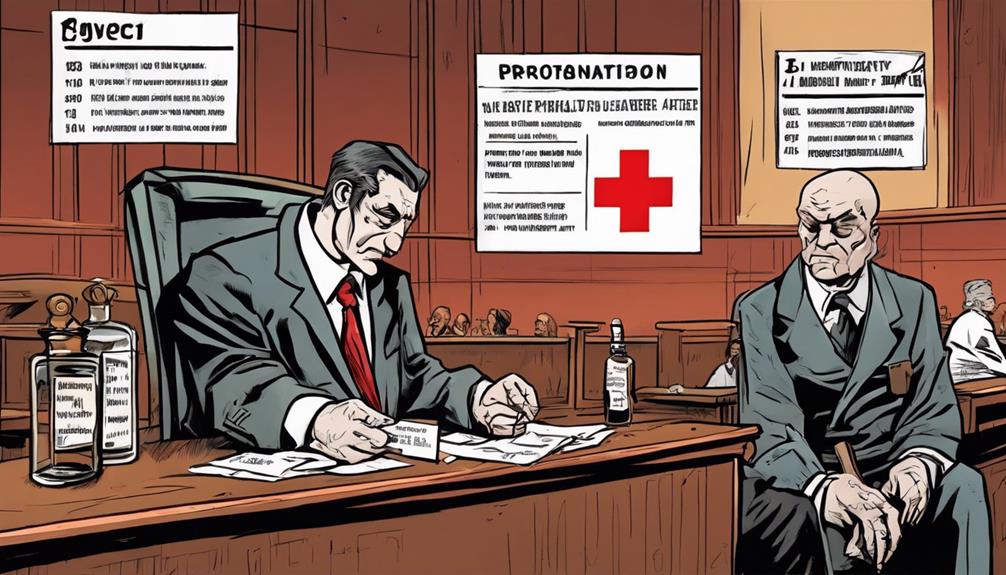
To effectively enforce abstaining from alcohol, you'll face several stringent conditions.
Monitoring alcohol consumption through regular check-ins and random testing ensures compliance.
Additionally, participating in alcohol education programs provides you with the knowledge and tools to avoid future infractions.
Monitoring Alcohol Consumption
Courts often mandate abstaining from alcohol as a probation condition, meticulously monitoring compliance through regular testing and strict reporting requirements.
You'll find that this aspect of probation isn't merely a suggestion but a legal obligation with serious consequences for non-compliance. It's crucial to understand that courts employ a variety of tools to ensure you're not consuming alcohol. These may include mandatory attendance in alcohol education programs, the use of sobriety checkpoints, and the installation of ignition interlock devices on your vehicle.
Probation officers also play a significant role in monitoring your abstinence. They may require you to attend regular meetings where you must provide detailed accounts of your daily activities, including any potential exposure to alcohol. Additionally, some jurisdictions may use electronic monitoring devices that can detect alcohol consumption through sweat.
Failure to adhere to these conditions can result in severe penalties, including extended probation, additional fines, or even incarceration. Therefore, it's in your best interest to fully comply with all monitoring requirements.
Understanding the gravity of this condition and adhering strictly to it can significantly impact the success of your probation period and your future legal standing.
Random Alcohol Testing
Random alcohol testing keeps you on your toes and ensures you adhere strictly to the no-alcohol condition of your probation. Courts implement this measure to monitor compliance and reduce the likelihood of repeat offenses. You might be subject to breathalyzer tests, urine samples, or even blood tests without prior notice. This unpredictability discourages drinking, as you never know when you'll be tested.
Failing a random test or refusing to take one can lead to serious consequences. Such actions are considered violations of your probation and may result in additional penalties, including extended probation, higher fines, or even jail time. This system creates a structured environment that significantly reduces the temptation to consume alcohol.
Moreover, random alcohol testing serves as a tangible reminder of the responsibilities you've agreed to by accepting probation. It's not just about avoiding alcohol; it's about demonstrating your commitment to making better choices. Courts see these tests as a reliable method to measure your progress and willingness to comply with legal expectations.
In essence, random alcohol testing acts as both a deterrent and a diagnostic tool, ensuring you stay the course and fulfill the terms of your probation effectively.
Alcohol Education Programs
In addition to random alcohol testing, participating in alcohol education programs plays a pivotal role in fulfilling your probation conditions and preventing future DUI offenses. These programs are designed to provide you with the knowledge and skills necessary to understand the impact of alcohol on your life and safety. By engaging in these educational sessions, you'll gain insights into the legal ramifications, health risks, and social consequences associated with alcohol consumption.
Completion of an alcohol education program demonstrates to the court your commitment to change and adherence to probationary requirements. These programs often involve a combination of classroom instruction, group discussions, and sometimes individual counseling. They're structured to help you recognize the patterns of behavior that led to your DUI and develop strategies to avoid making similar mistakes in the future.
Moreover, abstaining from alcohol while on probation isn't just about compliance; it's about fostering a healthier lifestyle and ensuring public safety. These educational programs can be a powerful tool in reshaping your relationship with alcohol. By taking them seriously, you're more likely to successfully complete your probation period and reduce the risk of reoffending.
Prioritize your participation and integrate the lessons learned into your daily life.
Random Drug Testing
Why might you face random drug testing as part of your first-time DUI probation conditions? Courts impose random drug testing to ensure compliance and deter substance abuse. It's not just about alcohol; they want to ensure you're avoiding all impairing substances.
When you're on probation, the court's primary goal is your rehabilitation and public safety. Random testing acts as a strong deterrent against relapse and promotes responsible behavior.
You might wonder how often and under what circumstances these tests occur. Typically, you'll receive no advance notice. This unpredictability ensures you maintain sobriety at all times, rather than merely preparing for scheduled tests.
You could be tested at your probation officer's office, a designated testing facility, or even at your residence.
Failing a random drug test can lead to severe consequences. You might face extended probation, mandatory rehabilitation programs, or even jail time. Each violation demonstrates non-compliance and threatens your probation status.
Therefore, it's crucial to adhere strictly to the terms and conditions of your probation. Random drug testing isn't just a hoop to jump through; it's a pivotal part of demonstrating your commitment to change and maintaining a substance-free lifestyle.
Payment of Fines and Fees

Apart from adhering to random drug testing, you must also promptly address the payment of fines and fees as a critical element of your first-time DUI probation conditions. The financial obligations imposed by the court are non-negotiable, and failing to meet them can result in severe consequences, including the extension of your probation period, additional fines, or even incarceration.
You'll need to carefully review the court's instructions regarding the amounts due and deadlines. It's crucial to maintain meticulous records of all payments made. If you're experiencing financial hardship, communicate proactively with your probation officer or legal counsel to explore possible adjustments or payment plans. Ignoring these financial obligations isn't an option and demonstrates a lack of compliance with court orders.
Furthermore, timely payment of fines and fees reflects positively on your commitment to fulfilling probation requirements and can influence the court's perception of your rehabilitation process. It also prevents any potential legal complications that could arise from non-payment.
Conclusion
By adhering to these seven key conditions—mandatory alcohol education, regular probation check-ins, community service, ignition interlock installation, abstaining from alcohol, random drug testing, and timely payment of fines—you'll not only comply with legal requirements but also foster positive personal growth.
This structured approach aims to steer you away from future offenses and towards a more responsible lifestyle.
Embrace these conditions as steps to reclaiming your life and ensuring the safety of others on the road.