When you consider the varying Blood Alcohol Concentration (BAC) limits for commercial drivers across different regions, it's clear that safety regulations reflect diverse priorities. In the United States and Canada, the limit stands at 0.04%, but in parts of Europe, you'll find stricter limits like 0.02% or even zero tolerance in Poland and Sweden. Australia and New Zealand also adopt a zero-tolerance policy. These differences can significantly impact international drivers and companies. Curious how these regulations shape road safety and business practices around the world? Let's explore further into these regional rules and their implications.
United States Regulations

In the United States, federal regulations mandate that commercial drivers maintain a blood alcohol concentration (BAC) limit of 0.04% to ensure road safety and minimize the risk of accidents. This strict limit is set by the Federal Motor Carrier Safety Administration (FMCSA) and applies to all drivers operating commercial motor vehicles (CMVs).
If you're a commercial driver, adhering to this limit is crucial for your safety and the safety of others on the road.
The FMCSA enforces these regulations through random testing, post-accident testing, and reasonable suspicion testing. If you're found with a BAC of 0.04% or higher, you'll face immediate consequences, including the suspension of your commercial driver's license (CDL) and potential fines.
Additionally, any detectable amount of alcohol can lead to an out-of-service order for 24 hours.
Statistics show that alcohol impairment is a significant factor in traffic accidents. By maintaining a lower BAC limit for commercial drivers, the FMCSA aims to reduce the likelihood of alcohol-related incidents.
It's essential that you understand and comply with these regulations to protect your career and public safety. Remember, even one drink can put you over the legal limit and jeopardize your livelihood.
European Union Standards
Unlike the United States, the European Union sets varying BAC limits for commercial drivers depending on the country, with most nations enforcing a strict 0.02% limit to bolster road safety. For instance, Germany, France, and Italy adhere to this 0.02% BAC threshold. These stringent standards aim to minimize alcohol-related accidents, given that commercial drivers often operate large vehicles with high passenger capacities or significant cargo loads.
In countries like Poland and Sweden, you'll find even harsher regulations with a BAC limit of 0.00%, effectively mandating complete sobriety for commercial drivers. This zero-tolerance approach reflects a prioritization of maximum safety on the roads. Conversely, the United Kingdom allows a slightly higher limit of 0.05%, although this is still lower than the general driver limit of 0.08%.
Data from the European Commission highlights that countries with these lower BAC limits tend to report fewer alcohol-related commercial vehicle incidents. This correlation underscores the effectiveness of strict BAC regulations.
If you're a commercial driver in the EU, it's crucial to be aware of the specific BAC limits in each country you operate in, as non-compliance can lead to severe penalties, including fines, license suspension, and even imprisonment.
Australia and New Zealand Policies
In both Australia and New Zealand, commercial drivers face a strict zero-tolerance BAC policy, meaning any detectable alcohol level results in penalties.
You'll find that enforcement is rigorous, with random breath testing and severe fines or license suspensions for violations.
This approach aims to ensure maximum safety on the roads by eliminating any risk of alcohol impairment among professional drivers.
Zero Tolerance Approach
Australia's and New Zealand's zero tolerance policies for commercial drivers mandate a blood alcohol concentration (BAC) of 0.00%, ensuring the highest level of road safety. By setting this stringent limit, these countries aim to eliminate any risk associated with alcohol impairment while operating commercial vehicles. Research shows that even minimal alcohol consumption can impair reaction times, coordination, and decision-making abilities, which are critical for commercial drivers who often handle heavy or hazardous loads.
In Australia, the National Transport Commission (NTC) enforces this zero tolerance policy across all states and territories. Similarly, New Zealand's Transport Agency (NZTA) mandates the same 0.00% BAC for all commercial vehicle operators. Both countries prioritize the safety of not only the drivers but also passengers and other road users.
Statistics from the Australian Bureau of Statistics indicate a significant reduction in alcohol-related traffic incidents involving commercial vehicles since the implementation of the zero tolerance policy.
You need to understand that these policies reflect a broader commitment to road safety. By maintaining a 0.00% BAC limit, Australia and New Zealand send a clear message: there's no room for alcohol in commercial driving. This approach sets a high standard for other regions to follow.
Enforcement and Penalties
Strict enforcement and severe penalties are key elements in Australia and New Zealand's zero tolerance policies for commercial drivers with a 0.00% BAC limit.
In Australia, roadside breath testing is conducted frequently and randomly. If you're caught with any detectable alcohol, expect immediate license suspension, fines ranging from AUD 400 to AUD 3,300, and possible imprisonment. Repeat offenders face harsher penalties, including longer license suspensions and higher fines.
New Zealand also prioritizes strict enforcement. Police conduct regular checkpoints and utilize advanced breathalyzer technology. If you're found with any BAC level above zero, you'll face fines up to NZD 4,500 and immediate disqualification from driving for at least six months. Repeat offenses can result in even more severe penalties, such as longer disqualification periods and heftier fines.
These stringent measures aim to ensure commercial drivers maintain absolute sobriety while on duty, thereby enhancing road safety.
Both countries' zero tolerance policies are supported by rigorous enforcement practices and substantial penalties, ensuring that commercial drivers think twice before consuming alcohol. By adhering to these strict regulations, you contribute to safer roads for everyone.
Canada's BAC Rules
Canada enforces a Blood Alcohol Concentration (BAC) limit of 0.04% for commercial drivers, ensuring strict road safety standards. This lower threshold compared to non-commercial drivers (0.08%) highlights the heightened responsibility expected from those operating large vehicles. If you're a commercial driver in Canada, adhering to this limit is crucial not only for compliance but also for the safety of everyone on the road.
In Canada, the enforcement of this BAC limit is rigorous. Random breath tests, especially at designated checkpoints, are common. If you're caught exceeding the 0.04% limit, the consequences are severe. Penalties include immediate license suspension, fines, and mandatory participation in educational programs. Repeated offenses can lead to longer suspensions and even imprisonment.
Data shows that commercial drivers are involved in fewer alcohol-related accidents compared to non-commercial drivers, partly due to these stringent regulations. Provinces like Ontario and British Columbia have additional measures, such as zero-tolerance policies for new commercial drivers within the first year.
Staying informed about these rules and strictly following them is essential. It ensures you're not only compliant with the law but also contributing to safer roads across Canada.
Latin American Guidelines

In Latin America, BAC limits for commercial drivers vary significantly by country, reflecting diverse approaches to road safety.
For example, Brazil enforces a strict zero-tolerance policy, meaning any detectable alcohol in a commercial driver's system is illegal and can result in severe penalties, including license suspension and fines.
In contrast, Argentina allows a BAC limit of 0.02%, offering more leniency but still promoting safety on the roads. This slight allowance acknowledges potential minor alcohol residue from common consumables like mouthwash, without compromising driver alertness.
Chile, on the other hand, sets its BAC limit for commercial drivers at 0.03%. This limit is a middle ground compared to Brazil and Argentina, aiming to balance strict regulation with practical considerations.
Peru's BAC limit stands at 0.05%, which aligns more closely with general non-commercial driving limits seen in other parts of the world. This higher limit may reflect a different risk assessment or regulatory approach.
You'll also find that Mexico's regulations can be quite variable depending on the state, but federal guidelines generally recommend a BAC limit of 0.04% for commercial drivers.
Understanding these variations is crucial for multinational companies operating in Latin America to ensure compliance and enhance road safety.
Asian Countries' Limits
In many Asian countries, you'll find strict enforcement policies and a common zero-tolerance approach to BAC limits for commercial drivers.
Japan, for example, enforces a 0.03% limit, while China has a 0.02% threshold.
However, there's notable regional variability, with some nations imposing even stricter limits or complete prohibitions.
Strict Enforcement Policies
Asian countries often implement stringent blood alcohol concentration (BAC) limits for commercial drivers to enhance road safety and reduce accident rates. For instance, Japan enforces a maximum BAC limit of 0.03%, while China sets it even lower at 0.02%. These low thresholds are part of a broader strategy to ensure that commercial drivers operate their vehicles with optimal alertness and control.
You'll find that enforcement in these countries is equally rigorous. In Japan, if a commercial driver is caught exceeding the BAC limit, penalties can include fines up to ¥1,000,000 (approximately $9,200 USD) and imprisonment for up to five years. China employs a similar approach, imposing fines, license suspensions, and potential jail time for violations.
What's notable is the use of frequent and unpredictable sobriety checkpoints. Authorities set these up at various times and locations, ensuring drivers can't easily predict or evade them. These checkpoints often employ breathalyzer tests as the primary tool for BAC measurement.
Additionally, advanced technology, such as in-vehicle monitoring systems, is increasingly used to detect alcohol consumption. These systems can immediately alert authorities or fleet managers if a driver's BAC exceeds the legal limit, thus ensuring swift action.
Zero Tolerance Approach
Adopting a zero tolerance approach, several Asian countries enforce extremely low BAC limits for commercial drivers to ensure maximum road safety.
In Japan, for instance, the BAC limit for commercial drivers is set at 0.03%. This stringent limit aims to minimize risks and enhance public safety. Similarly, China has a very low threshold, with a BAC limit of 0.02% for commercial drivers. The rationale is clear: even minimal alcohol consumption can impair driving abilities, especially for those operating large vehicles.
South Korea also adopts a strict stance, enforcing a BAC limit of 0.03% for commercial drivers. These limits reflect a broader cultural emphasis on road safety and the high stakes involved in commercial driving. In India, the BAC limit for commercial drivers is set at 0.00%, effectively meaning no alcohol consumption is tolerated. This zero tolerance policy underscores the critical importance of maintaining full cognitive abilities while driving.
You'll find that these strict BAC limits are rigorously enforced through regular checkpoints and severe penalties for violations. By implementing these low limits, Asian countries aim to reduce traffic accidents and promote safer roads for everyone.
Regional Variability Observed
While examining BAC limits for commercial drivers, you'll notice significant regional variability across Asian countries.
For instance, China enforces a stringent zero-tolerance policy, setting the BAC limit at 0.00%. This aligns with the country's broader road safety initiatives and strict legal repercussions for violations.
In contrast, Japan allows a slightly higher limit of 0.03%. This low threshold reflects the nation's commitment to minimizing risks associated with impaired driving while acknowledging practical enforcement considerations. Similarly, South Korea has set the BAC limit at 0.03%. This uniformity in policy suggests a regional awareness of the dangers posed by even minimal alcohol consumption for commercial drivers.
India, however, sets its BAC limit at 0.00% for commercial drivers, mirroring China's approach. This zero-tolerance policy highlights the country's focus on enhancing road safety amid increasing vehicular traffic and accident rates. Conversely, Thailand permits a higher BAC limit of 0.05%, reflecting a more lenient stance compared to its regional counterparts.
These differences underscore the diverse strategies employed by Asian countries to address alcohol consumption among commercial drivers. The variation in limits indicates that each country tailors its policies based on unique cultural, legal, and road safety considerations.
African Nations' Laws
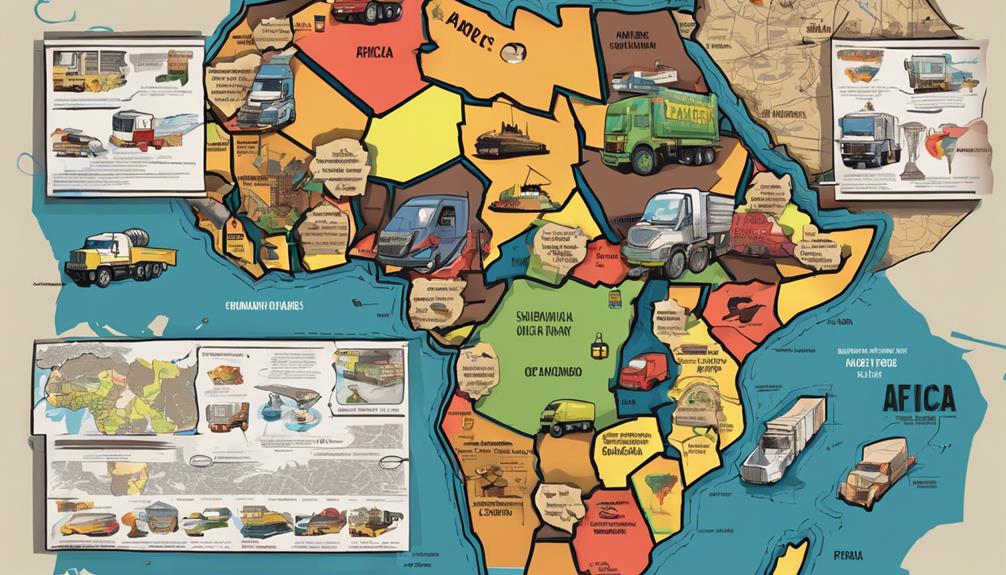
Many African nations have set stringent BAC limits for commercial drivers to enhance road safety and reduce traffic accidents.
In South Africa, for instance, the legal BAC limit for commercial drivers is 0.02%, significantly lower than the 0.05% limit for private drivers. This policy aims to minimize the risk of alcohol-related incidents on the roads.
Nigeria also enforces a strict BAC limit for commercial drivers, capping it at 0.02%. This regulation is part of a broader strategy to combat the country's high traffic accident rate.
Similarly, in Kenya, the BAC limit for commercial drivers is restricted to 0.00%, reflecting a zero-tolerance approach to drinking and driving.
Ethiopia follows suit with a BAC limit of 0.00% for commercial drivers, reflecting a rigorous stance against impaired driving. Ghana, too, enforces a stringent limit of 0.02% for commercial drivers, aiming to bolster road safety measures.
These regulations illustrate a clear pattern: African nations are prioritizing road safety through stringent BAC limits for commercial drivers.
Middle East Restrictions
In the Middle East, countries have also set strict BAC limits for commercial drivers to ensure road safety and reduce the incidence of traffic accidents.
For instance, in Saudi Arabia, the legal BAC limit for commercial drivers is 0.0%, meaning no alcohol consumption is allowed whatsoever. This zero-tolerance policy is strictly enforced, with severe penalties for violators, including hefty fines, license suspension, and even imprisonment.
Similarly, the United Arab Emirates enforces a 0.0% BAC limit for all drivers, including commercial ones. The UAE takes road safety very seriously, employing advanced technologies such as random breath testing and roadside checkpoints to catch offenders. Penalties for violating these laws are stringent and can result in significant financial and legal consequences.
In contrast, Turkey allows a higher BAC limit of 0.05% for commercial drivers. Although more lenient compared to its Gulf neighbors, Turkey still maintains rigorous enforcement and penalties to ensure compliance and safety.
Russia and Eastern Europe
Russia and several Eastern European countries have established varied BAC limits for commercial drivers, reflecting their distinct regulatory approaches to road safety.
In Russia, the legal BAC limit for commercial drivers is 0.03%. This stringent limit underscores the country's commitment to reducing alcohol-related accidents.
Poland, on the other hand, enforces a BAC limit of 0.02% for commercial drivers, one of the lowest in the region. This low threshold aims to ensure that drivers are almost entirely alcohol-free while on duty.
Lithuania adopts a similar stance with a 0.02% BAC limit, reinforcing a zero-tolerance approach to drinking and driving.
Contrastingly, Romania and Bulgaria have set slightly higher limits. Romania's BAC limit for commercial drivers is 0.00%, reflecting absolute zero tolerance. Bulgaria, however, allows a BAC of up to 0.05%, which is relatively lenient compared to its neighbors.
It's crucial to understand these differences if you're operating or managing commercial vehicles in these regions. Each country's regulations are designed to enhance road safety, but they vary significantly.
Adhering to these limits not only ensures compliance but also promotes safer driving practices across diverse regulatory landscapes.
Conclusion
Understanding BAC limits for commercial drivers across regions is essential for compliance and safety.
The U.S. and Canada set limits at 0.04%, while the EU enforces stricter standards, ranging from 0.02% to 0.00%.
Australia, New Zealand, and several Asian countries adopt zero-tolerance policies.
Regional variations highlight differing safety priorities, making it crucial for you to stay informed and adhere to local regulations.
Always prioritize safety by knowing and respecting these diverse limits.